Jul 20, 2026
How Should a 10–20 Person Creative Agency Actually Use AI?
Most creative agencies already use AI. That is not the interesting question anymore.

Most creative agencies already use AI.
That is not the interesting question anymore.
The founder uses ChatGPT. A strategist uses Claude. The content team has a collection of prompts. Someone experimented with an AI meeting tool. Another person built a custom GPT.
The company has technically adopted AI.
But five people using AI individually is not an AI operating system.
The more important question is:
How should a 10–20 person creative agency embed AI into the way the studio actually works?
The gap is not access.
The gap is workflow design.
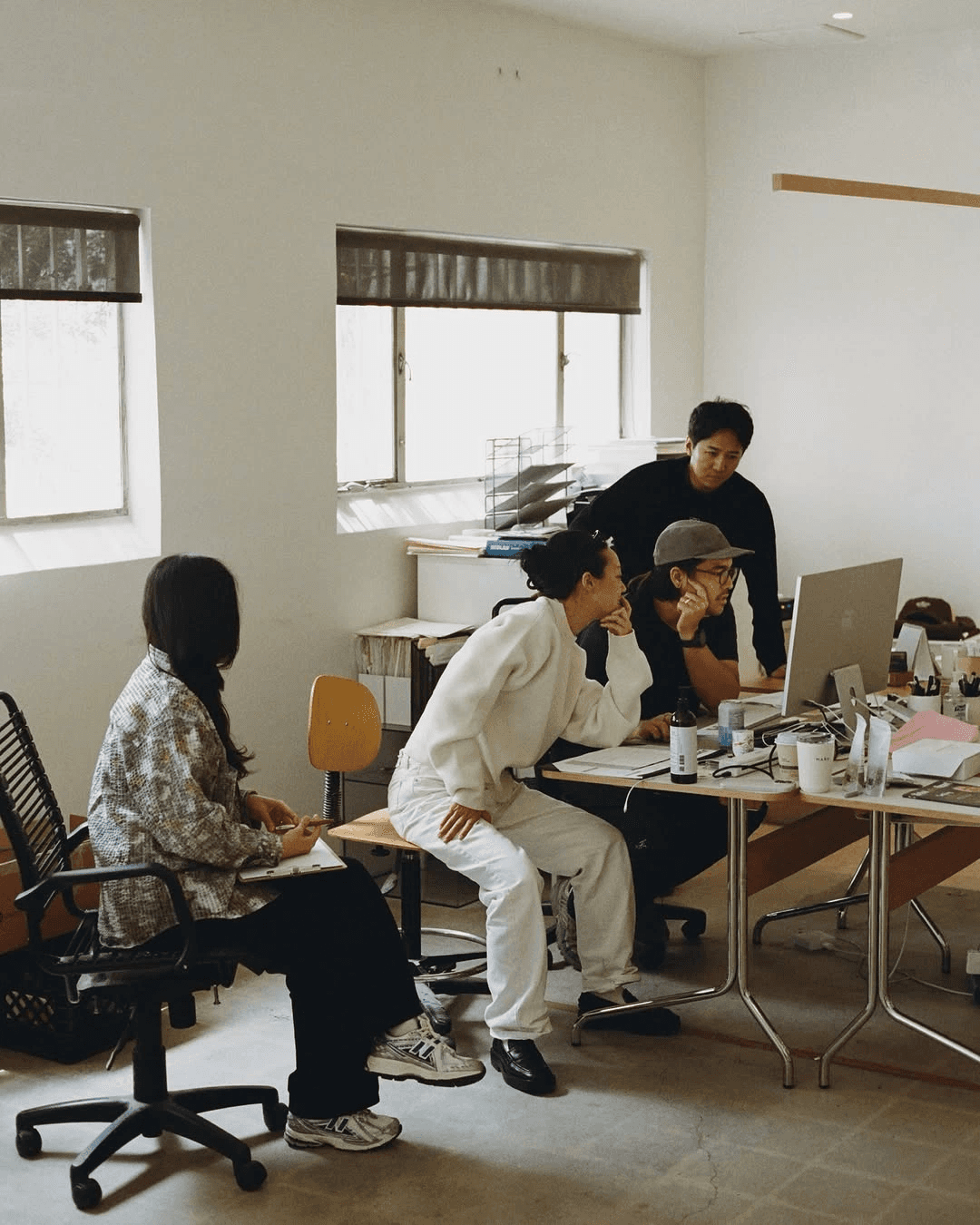
Here is how I believe a 10–20 person creative studio should think about AI.
Start with operational weight, not AI tools
The wrong first question is:
Which AI tools should our agency use?
The better question is:
Where are talented people repeatedly doing information work that does not require their highest-value judgment?
Look for activities such as:
Reformatting information
Synthesizing long transcripts
Preparing project context
Drafting status updates
Converting meetings into tasks
Searching across project information
Preparing recurring reports
Drafting first versions of documentation
Checking routine requirements
Categorizing feedback
These are not automatically bad tasks.
But they are excellent candidates for investigation.
At TINKR, I think about this through Craft Leverage:
How much of your team’s time and attention is spent on the expertise clients actually hired them for?
A strategist should spend more time thinking.
A Creative Director should spend more time applying creative judgment.
A founder should spend more time shaping the business.
AI should support that outcome.
What I would investigate
Ask each senior person to identify the information-heavy work that repeatedly happens before they can apply judgment.
Do not begin by asking which tool would automate it.
First understand why the work exists, where its context comes from and what a good output actually requires.
The five levels of AI maturity inside a creative studio
Not every studio using AI has the same level of operational maturity.
There is a major difference between an employee using a chatbot and a shared workflow that reliably supports the wider company.
Level 1: Individual experimentation
People use ChatGPT, Claude or other tools independently.
There are no shared workflows, no consistent context and nobody owns quality.
The benefit belongs mostly to the individual.
When that person leaves, much of the knowledge leaves with them.
Level 2: Shared prompting
The team has prompt libraries and exchanges useful instructions.
This is useful, but the human still manually performs the entire process.
They collect the context, copy it into the tool, run the prompt, check the output and move the result into another system.
AI is becoming a better individual tool.
It is not yet creating much operating leverage.
Level 3: Defined AI workflows
The studio identifies repeated jobs where AI is useful.
The team knows:
When the workflow runs
What context it uses
What the AI produces
Who reviews the output
Where the final information lives
What happens after approval
This is where AI starts becoming operational.
Level 4: Connected AI workflows
AI is embedded between systems.
A meeting ends.
Decisions and potential tasks are extracted.
A human reviews them.
Approved tasks enter the project system.
The decision log is updated.
The system supports the work, while humans remain responsible for judgment.
Level 5: AI-enabled operating architecture
The studio deliberately designs operating workflows around human and AI strengths.
AI handles more:
Synthesis
Preparation
Monitoring
First drafts
Classification
Information routing
Context retrieval
Humans focus more on:
Taste
Judgment
Relationships
Strategy
Decisions
Original creative work
The goal is not maximum AI.
The goal is maximum leverage.
Seven AI workflows I would investigate first
The right workflows depend on the studio.
But for a 10–20 person creative agency, these are seven areas I would investigate before experimenting with more disconnected tools.
1. Sales-to-delivery context
A major agency problem occurs when the people who sell the project understand the client better than the people who deliver it.
The proposal contains one part of the context.
The discovery call contains another.
Client emails, research and informal conversations contain the rest.
AI can help structure this information into:
Client goals
Important stakeholders
Known risks
Scope boundaries
Strategic context
Important client language
Open questions
Previous promises
Delivery assumptions
A human should review it.
The value is not that AI wrote a brief.
The value is reducing context loss between sales and delivery.
What I would investigate
Take one recently signed project and compare what the sales team knew with what the delivery team received.
What was lost, misunderstood or rediscovered later?
2. Meeting-to-decision workflows
Most meeting tools summarize meetings.
That is not enough.
The valuable operating questions are:
What was decided?
What changed?
What remains unclear?
Who owns the next action?
What is blocked?
Does the decision affect scope?
Does it affect the timeline?
Where should the decision be stored?
An AI workflow should produce structured operational information.
It should not create another long summary nobody reads.
A meeting should leave behind decisions, ownership and movement—not just notes.
3. Proactive client-update preparation
Client updates are often assembled manually.
The Project Manager checks the task system, messages the team, reviews the timeline and rewrites information that already exists across the project.
A better workflow can prepare:
Progress since the last update
Current project stage
Important decisions
Upcoming milestones
Emerging risks
Required client actions
Changes to scope or timing
The Project Manager reviews and edits the communication.
AI prepares. Humans communicate.
4. Project context assistants
One of the most interesting applications of AI for a creative studio is helping people find project context.
Instead of repeatedly asking:
Why did the client reject the first direction?
What was agreed about the timeline?
Was this included in scope?
Why was this decision made?
What feedback has already been addressed?
Who approved the change?
A carefully designed system may retrieve information from approved project sources.
But this requires serious attention to:
Context quality
Permissions
Source reliability
Information freshness
Clear ownership
A chatbot connected to messy information creates faster confusion.
The operating architecture must come first.
What I would investigate
Ask whether the team has one reliable place where important project decisions can be found.
If the source information is unreliable, an AI assistant will only retrieve unreliable context more efficiently.
5. Research synthesis
Creative and strategic teams often gather large amounts of information:
Interviews
Market research
Competitor notes
Customer feedback
Workshop outputs
Client documents
Survey responses
AI can help:
Cluster repeated patterns
Identify emerging themes
Compare sources
Surface contradictions
Organize evidence
Create a structured first-pass synthesis
The strategist still interprets the meaning.
AI reduces the mechanical information load around the thinking.
AI can arrange the evidence. It should not decide what the evidence means for the strategy.
6. Routine QA support
The word support matters.
AI should not replace high-value creative judgment.
For a Webflow or Framer studio, AI-assisted checks may support:
Content completeness
Broken-link review
Metadata requirements
Basic consistency
Checklist validation
Missing-page identification
Repeated content issues
For a branding studio, an AI workflow might check:
Whether required delivery assets are present
Whether file names follow the agreed structure
Whether a presentation contains every required section
Whether deliverables match the handover checklist
Your Creative Director should not personally check whether somebody forgot a file.
Creative judgment stays human.
Routine completeness can be supported by systems.
7. SOP and decision documentation
Studios make operating decisions constantly.
The problem is that the reasoning disappears.
A founder explains a process during a Loom recording.
A Project Manager describes a recurring exception in a meeting.
A Creative Director explains why a review should happen in a particular way.
The information exists for a moment.
Then it disappears into a recording or transcript.
AI can help turn:
Loom recordings
Internal explanations
Meeting transcripts
Process walkthroughs
Decision discussions
into structured first-draft documentation.
The team reviews it.
The approved information becomes part of the studio’s operating system.
What I would investigate
Which important process still depends on someone remembering how it works?
That is often a better AI opportunity than another generic chatbot.
Where creative agencies should not use AI blindly
There is a dangerous version of AI adoption.
The founder sees AI primarily as a cost-cutting mechanism and asks:
How many people can we replace?
I think that is strategically shortsighted for premium creative companies.
Your most defensible work increasingly depends on:
Taste
Perspective
Strategic judgment
Trust
Original thinking
Deep client understanding
Creative courage
The better operating question is:
What work prevents our talented people from doing more of those things?
Then use AI aggressively around that work.
Do not use AI blindly to:
Make final strategic decisions
Replace meaningful client conversations
Produce unreviewed creative work
Interpret sensitive feedback without human context
Approve scope or commercial changes
Replace the person accountable for quality
Generate important outputs from unknown or unapproved sources
AI should expand the capacity around judgment.
It should not remove accountability for judgment.
Three rules for AI workflows in creative studios
Rule 1: A human owns the outcome
Every meaningful AI workflow needs an owner.
Ask:
Who is responsible for quality?
Who reviews the output?
Who decides whether it is correct?
Who handles exceptions?
Who is accountable when the output is used?
An AI workflow without ownership becomes an automated source of ambiguity.
Rule 2: Use approved context
Weak context creates weak output.
If project information is fragmented, solve that problem before building a sophisticated AI layer.
AI magnifies the quality of the operating context it receives.
Clean, trusted context makes AI more useful.
Fragmented, outdated or contradictory context makes AI confidently unreliable.
Rule 3: Measure the human outcome
Do not celebrate that you built six AI agents.
Measure whether:
Preparation time decreased
Repeated questions decreased
Senior review load decreased
Context-retrieval time decreased
Client communication became more proactive
Important information became easier to find
The team spent more time on high-value work
The output is not the AI system.
The output is leverage.
The best AI strategy for a 15-person agency
If I ran a 15-person creative studio, I would not spend the next six months buying every new AI tool.
I would:
Map where founder and senior-team attention is being wasted.
Identify the three most repeated information-heavy workflows.
Choose the workflow with the clearest operating consequence.
Redesign that workflow before automating it.
Build one shared AI-supported workflow.
Define the human review point.
Train the team around one consistent process.
Measure whether talented people actually reclaimed time and attention.
Improve the workflow based on real usage.
Repeat.
I would rather have one workflow that the entire studio trusts than twenty AI experiments nobody consistently uses.
AI should not make your studio feel more technological.
It should make the studio feel lighter.
AI should create more room for talent
The opportunity is not to fill every part of the studio with AI.
It is to redesign the operating layer so human attention is used more deliberately.
AI can prepare.
AI can synthesize.
AI can classify.
AI can retrieve.
AI can monitor.
AI can route.
But people should continue to own the things that make a creative studio valuable:
Taste
Judgment
Trust
Relationships
Strategy
Responsibility
Original creative thought
The best AI-enabled studio may not feel dominated by AI.
It may simply feel clearer, calmer and more capable.
Get a Studio Leverage Review
TINKR helps founder-led creative studios identify where systems and AI could remove operational weight without weakening human judgment.
Start with a preliminary review of the first operating constraint worth investigating.
Start Your Studio Leverage Review
Sources and further reading
Promethean Research — State of Digital Services
McKinsey — Superagency in the Workplace
Verify exact titles, publication dates, statistics and live links before publishing.